

Hunting Season, Tree Stands, and Firewood: Protecting Your Back Through a Western New York Fall
The leaves on Beahan Road started turning last week, and that means our schedule at Lunt Chiropractic is about to change shape. Every fall we see the same wave of patients walk through the door: the guy who spent Saturday hauling a stand out to a spot in Bergen, the homeowner who stacked a face cord of firewood in one afternoon, the dad who finally got the gutters cleaned and now cannot turn his head to back out of the driveway.
None of them did anything reckless. That is the part people find frustrating. Fall in Western New York just asks your body to do a very specific set of unfamiliar things - awkward lifting, long cold sits, twisting under load - in a short window of weeks. If you know what is coming, you can get through it in good shape.
Why fall is hard on a spine in a way summer is not
Summer work tends to be repetitive and warm. You mow, you weed, you walk. Fall work is heavier, colder, and more unpredictable, and it usually happens in bursts on a weekend because the weather finally cooperated.
Three things stack up at once this time of year:
Cold tissue. Muscles and joints that start the morning at 38 degrees do not tolerate a sudden max effort the way warm ones do.
Load with rotation. Firewood, deer, bags of leaves, and coolers all get lifted and twisted in the same motion. Rotation under load is where low backs tend to complain.
Long static holds. Sitting still in a tree stand for four hours, or kneeling to clean out a flower bed, puts your spine in one position far longer than it wants to be there.
Add the first real cold snap and the shorter days that cut into your usual walk or gym trip, and you have a body that is less prepared for more work. That is the whole equation.
Tree stand season: the sits are the problem, not the shot
Hunters are usually surprised by this one. They brace for the climb and the drag, but the thing that actually leaves them stiff is the sit. Four hours in a hang-on stand with your feet dangling, hips flexed, shoulders rolled forward, and a bow across your lap is a posture your low back and mid back have to hold without much help from anything else.
A few things that help, and none of them cost anything:
Shift position every 20 to 30 minutes, even slightly. Change which foot is forward, sit back against the tree, stand if the stand allows it safely.
Get your feet supported. Dangling legs pull on your low back for hours. A platform or foot rest changes that.
Warm up before you climb. Five minutes of walking, some hip swings, a few gentle trunk rotations. You would not sprint cold; do not climb cold either.
Rethink the drag. A one-person drag out of the woods, uphill, over uneven ground, is one of the highest-load things anyone in this area does all year. Bring help or a sled.
And climb with your gear on your back rather than in one hand. Carrying a heavy pack on one side up a ladder is a great way to ask a lot of one side of your spine at the exact moment your balance is already busy.
Firewood, leaves, and the ladder
Firewood is the single most common fall complaint we hear about. It is heavy, irregular, and you move a lot of it at once. The mechanics matter more here than raw strength.
Split at waist height when you can, not off the ground. A block or splitter that raises the wood cuts out dozens of full bends per hour.
Turn your feet, not your spine. When you move a piece from the pile to the stack, step to face the target instead of twisting through your low back.
Break it into sessions. Two hours today and two tomorrow beats four in one shot, and it is not close.
Stack from the bottom up at knee height and above where possible, so the heaviest reaching is not also the deepest bending.
Ladder work has a different risk profile. The issue is not usually the climb but the reach - standing on a rung and stretching sideways to scoop gutter debris, with your feet fixed. That is a loaded side bend with no escape route. Move the ladder more often than feels necessary. Everyone knows this and nobody does it.
Leaf bags deserve a mention too. A wet leaf bag in late October weighs far more than the same bag would have in September, and it is soft, so it shifts as you lift. Keep it close to your body, hinge at the hips, and do not swing it into the truck bed.
The signals that mean you should come in
Soreness the day after hard yard work is normal and usually fades in a couple of days. What is worth paying attention to is a change in pattern:
Pain that is sharper or more localized than general soreness, especially on one side.
Pain that travels into your hip, buttock, or down the leg.
Numbness, tingling, or weakness anywhere in the leg or foot.
Stiffness that is worse on day three than it was on day one.
A specific motion you now avoid without thinking about it - turning to back out of the driveway, putting on socks, getting out of the truck.
That last one is the sneaky one. People adapt around a restriction so quickly they stop noticing it, and then the compensation becomes its own problem six weeks later.
What care at Lunt Chiropractic looks like for this
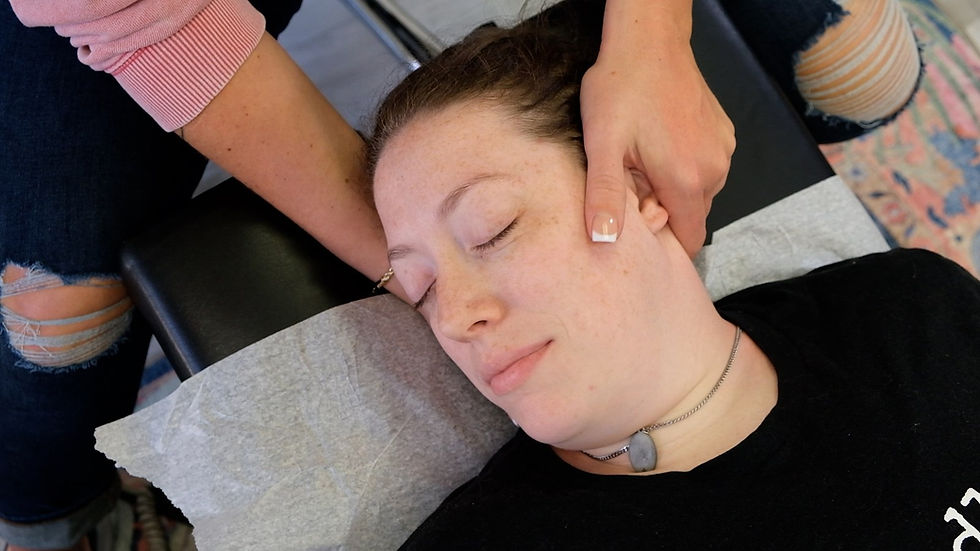
We start with an actual exam, not an assumption. Where is the motion restricted, what reproduces the pain, what does not, and is there anything that needs a referral rather than an adjustment. Hands-on assessment and palpation tell us a lot about which segments are moving and which are not.
From there, care is usually some combination of adjusting the restricted joints, soft tissue work on the muscles that have been guarding, and giving you specific things to do between visits. Our team uses several approaches depending on what fits the person in front of us, including the Activator method for patients who prefer or need a lower-force adjustment.
For the achy, cold-weather stiffness side of things, some patients add infrared sauna and red light therapy sessions. It is not a replacement for care, but plenty of people find the warmth helpful going into the colder months, and it pairs well with the weekend-warrior recovery pattern.
The part that matters most is what you do the other six days. A few minutes of hip and thoracic mobility work in the morning during firewood and hunting season does more for you than any single visit.
A simple pre-season routine
If you have three weeks before your heavy fall work begins, that is enough time to make a real difference. Nothing fancy:
Walk 20 minutes most days. The single most underrated thing for a low back.
Two sets of hip hinges with no weight, daily, to remind your body what the pattern feels like.
Thoracic rotation: sit in a chair, cross your arms, turn slowly to each side 10 times.
Glute work. Weak hips make your low back do their job. Bridges and step-ups are plenty.
Warm up for five minutes before the wood pile, every single time.
None of that is exciting, and all of it works better than the alternative, which is toughing it out until something locks up on a Sunday afternoon.
Get ahead of it this year
The patients who sail through fall are almost always the ones who came in before the wood pile, not after. If your back has a history of speaking up in October, or if it already has this year, we would rather see you early.
Lunt Chiropractic is at 503 Beahan Road in Rochester. We have appointments six days a week, including Saturday mornings, which tends to work well for people whose only free weekday time is early or late. Call us at (585) 594-0026, email info@luntchiropractic.com, or reach out through luntchiropractic.com to schedule. Bring the details of what you have been doing - the specific lift, the specific sit - because that is usually where the answer is.


Comments