

Why Your Jaw Hurts: TMJ, Clenching, and What We Can Do About It
Most people who come to see us about jaw pain do not lead with the jaw. They lead with headaches. Or a sore neck. Or the fact that they keep waking up with a dull ache along the side of the face and no clear reason for it. Somewhere in the middle of the visit it comes out: my dentist mentioned I might be clenching, or my jaw clicks when I chew, or I cannot open wide enough to bite a sandwich without shifting my head.
Jaw pain and TMJ discomfort is one of the conditions we treat at Lunt Chiropractic on Beahan Road, and it is one of the more misunderstood ones. People assume it belongs entirely to the dentist. Sometimes it does. Often, though, the jaw is only one part of a bigger pattern involving the upper neck, the muscles along the base of the skull, and how a person holds their head all day long.
What the TMJ actually is, in plain language
TMJ stands for temporomandibular joint. There are two of them, one on each side, right in front of your ears. Put a finger there and open your mouth and you will feel them move. They are small, they work constantly, and they are surrounded by muscles that also help with chewing, swallowing, and, in a roundabout way, holding your head up.
When people say they "have TMJ," what they usually mean is a temporomandibular disorder: pain, restricted motion, clicking, popping, or muscle tightness involving that joint and everything attached to it. It can show up on one side or both. It can come and go for years before it becomes annoying enough to do something about.
Symptoms we hear about regularly include aching in front of the ear, tenderness in the cheek muscles, headaches that sit at the temples, a jaw that feels tired after a long conversation or a chewy meal, clicking with opening, ringing or fullness in the ears, and neck tightness on the same side as the sore jaw. Some people notice their bite feels off. Some notice they cannot open evenly anymore, and the jaw drifts to one side on the way down.
Why jaw pain and neck problems usually travel together
Here is the part most people have never had explained to them. The jaw does not operate in isolation. The muscles that move it share real estate with the muscles that stabilize your head and upper neck. Nerves supplying the jaw and face and the nerves from the top of the neck feed into the same neighborhood in the brainstem, which is one reason upper neck tension and jaw pain so often show up as a package deal.
So when someone spends nine hours a day with their head pushed slightly forward looking at a monitor, the front of the neck shortens, the muscles at the base of the skull work overtime, and the jaw ends up resting in a position it was never meant to hold. Add stress on top of that and the clenching starts. Add a night of grinding and the muscles never get a real break.
This is why treating only the jaw sometimes fails. A night guard from the dentist protects your teeth, which matters, but it does not release a locked-up upper neck or retrain the way you carry your head. And a great neck adjustment will not do much if the muscles under the cheekbone are still in a knot. The two pieces need to be looked at together.
How we evaluate jaw pain at Lunt Chiropractic
Our approach starts the same way it does for every complaint that walks through our door: a thorough assessment before anyone touches a treatment table with intent. Dr. Kelsey Lunt built this practice around finding the root cause rather than chasing the symptom, and jaw pain is a good example of why that matters.
We will ask about your history first. When did it start, was there an injury or a dental procedure or a long stretch of stress, does it wake you up, does anything make it better. We want to know whether you chew gum, whether you sleep on your stomach, whether you hold the phone with your shoulder, whether you have been told you grind.
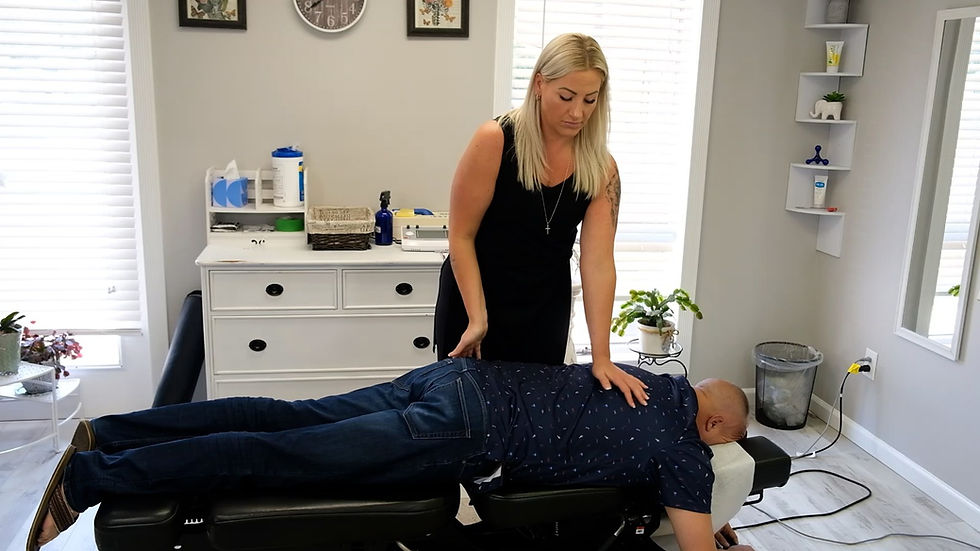
Then we look. Posture analysis tells us what your head and shoulders are doing at rest. Range of motion tests show us how far the jaw opens, whether it deviates, and how the upper neck moves. And then we use our hands. Palpation is a skilled, hands-on examination that lets us feel tension, restriction, and asymmetry beneath the surface, and it is one of the most useful tools we have with the jaw specifically, because the muscles involved are small and the differences between sides are subtle.
If something we find points outside our scope, we will say so. Jaw pain can involve dental issues, arthritis, or disc problems inside the joint itself, and sometimes the right next step is a conversation with your dentist or another provider. We would rather send you to the right person than treat around a problem we cannot fix.
What treatment usually looks like
There is no single protocol, because there is no single cause. But most jaw-related care plans here pull from a few tools.
Gentle chiropractic adjustments to the upper cervical spine, which often changes how the jaw sits and moves almost immediately
Soft tissue work on the muscles of the jaw, cheek, and temple, including myofascial release and cross-friction techniques
Instrument assisted soft tissue manipulation or cupping for the neck and shoulder muscles feeding into the problem
Ergonomic changes, especially monitor height, phone habits, and how you sit through a long workday
Simple at-home work: jaw relaxation, breathing through the nose, and a few exercises that take two minutes a day
Most people notice something in the first handful of visits, even if it is small. Less morning tightness. Fewer headaches. The click quieting down. Full change takes longer, because habits built over years do not undo themselves in a week, and the muscles need time to learn a new resting position.
September is a sneaky month for this
We see an uptick in jaw and neck complaints every fall, and it is not a coincidence. Summer in Rochester is loose. Once school starts back up, the alarms move earlier, the commute on 490 returns, the desk hours pile back on, and the mental load of a packed calendar lands all at once. Clenching is one of the first places that stress shows up in the body, and a lot of people do not notice they are doing it until their jaw is already sore.
A few things you can try before your appointment
None of this replaces an exam, but it will not hurt. Notice where your teeth are during the day. Ideally, lips together, teeth slightly apart, tongue resting on the roof of your mouth. Most clenchers are surprised at how often their teeth are touching. Try breathing through your nose instead of your mouth. Cut back on gum for a couple of weeks and see if anything changes. Bring your monitor up so you are not looking down all day. And put a warm compress on the side of your face for ten minutes in the evening if the muscles are aching.
If your jaw has been bothering you for months and you have been telling yourself it is not a big enough deal to bring up, bring it up. It is exactly the kind of thing we look at.
Come see us on Beahan Road
Lunt Chiropractic is a women-owned practice at 503 Beahan Road in Rochester, in the Westgate Woods Medical Complex near the airport. We see patients from Gates, Chili, Greece, and all over the west side, and our schedule includes early mornings, evenings, and Saturday hours because life does not stop for an appointment.
Call us at (585) 594-0026, email info@luntchiropractic.com, or book online at luntchiropractic.com. If you are new, you can fill out your forms ahead of time or use the first fifteen minutes of your visit. Either way, we will take the time to figure out what is actually going on with your jaw before we do anything about it.


Comments