

Fall Sports Season: Keeping Young Athletes Healthy From September Through Playoffs
Fall sports in Western New York have a rhythm to them. Two weeks of preseason in August heat, then the season starts and the temperature drops thirty degrees, and by the end of September kids are playing soccer, football, volleyball, and cross country on cold, hard ground four or five days a week. Practices are long, games stack up on weekends, and homework gets done in the car.
Parents bring us a version of the same question every September: my kid says their back hurts, is that just growing pains, or is it something we should be looking at? Fair question, and the answer is usually somewhere in between.
Why the first month of the season is the risky one
Most in-season injuries in youth sports are not dramatic collisions. They are load problems. A body that spent the summer doing three things a week suddenly does two hours a day of cutting, sprinting, jumping, and landing. Muscle strength adapts fairly quickly. Tendons and growth plates adapt slowly. That mismatch is why so many complaints show up two to four weeks in, right around the third week of September.
Growing athletes have an extra wrinkle. Bones lengthen before the muscles crossing them catch up, so a kid in the middle of a growth spurt is temporarily tighter through the hamstrings, hip flexors, and calves than they were in June. Tight tissue plus a sudden spike in training volume is where knee pain, heel pain, and low back complaints come from.
And the same kid is usually sitting in a school chair for six hours before practice, hauling a loaded backpack between classes, and doing homework on a phone or laptop. The spine does not clock out when the sport starts.
It also helps to know that this is not unique to your kid or your program. Coaches across Monroe County are managing the same compressed calendar, and the athletes who finish the season healthy are usually the ones whose families treated small complaints as information instead of weakness.

Growing pains versus something worth a look
Normal training soreness is diffuse, shows up in the muscle bellies, appears the day after a hard session, and improves with light movement. It is symmetrical more often than not, and it fades within a couple of days.
What earns a visit:
Pain in one specific spot the athlete can point to with one finger, especially over a bone.
Pain that shows up during activity and gets worse as the session goes on, rather than warming up and easing off.
A limp, or a change in how they run, throw, or land — sometimes a coach notices this before the kid says a word.
Low back pain that is worse when arching backward. In gymnasts, linemen, and volleyball players especially, that pattern deserves a real exam.
Heel pain in a 9 to 13 year old, or knee pain right at the bump below the kneecap. Both are common and both respond much better to early management than to waiting out the season.
Any headache, dizziness, light sensitivity, or fogginess after a hit to the head. That is a same-day conversation with a medical provider, not something to manage at home.

What we actually do with a young athlete
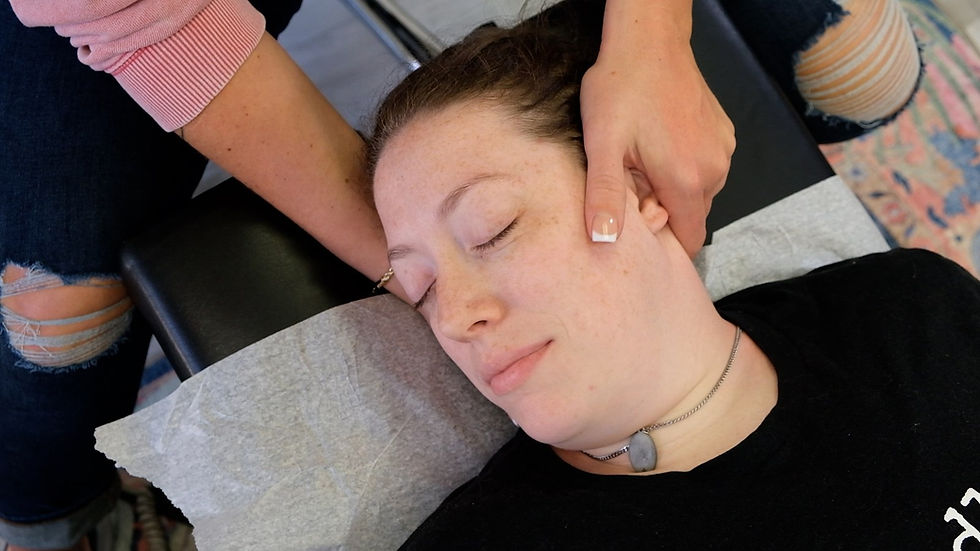
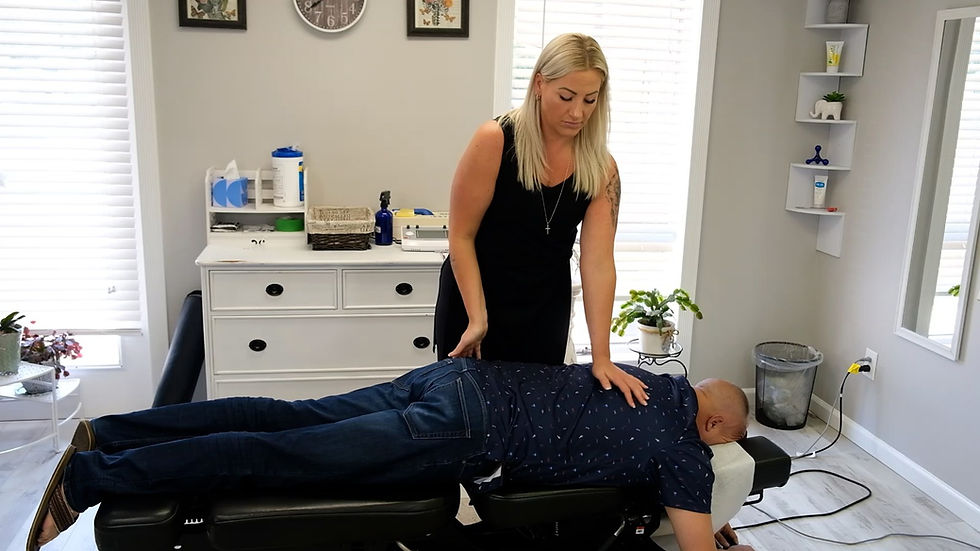
The first visit is mostly conversation and hands. We want to know the sport, the position, the practice schedule, what changed recently, and what specifically hurts and when. Then we examine — how the joints move, where the tissue is tight or tender, how the hips and ankles are contributing, whether one side is doing more work than the other.
Adjustments for kids and teens are not the same as they are for a 45 year old landscaper. The force is smaller, the contact is more specific, and in plenty of cases we use low-force techniques instead. What we are after is restoring motion in a joint that has stopped moving well, so the tissue around it stops picking up the slack.
Just as often, the more valuable part of the visit is the homework: two or three specific mobility or strength drills for the area that is actually driving the problem. Tight calves feeding heel pain. Hips that will not extend, so the low back extends instead. A shoulder blade that is not controlling well, so the front of the shoulder gets cranky. Soft tissue work helps break the pain cycle; the exercises are what keep it from coming back in November.
We also stay in our lane. If something in the exam suggests a growth plate injury, a fracture, or anything that needs imaging or a different specialist, we say so and help the family get to the right place. Fall sports are not worth gambling on.
Five things every fall sports family can do this week
Protect sleep before anything else. Recovery in a teenage athlete is mostly a sleep story, and eight to nine hours is not a luxury for a body that is both growing and training.
Build in one real day off per week. Not a light practice — a day. Athletes who train more hours per week than their age in years are consistently the ones who break down.
Watch the backpack. One strap, loaded heavy, worn low, on a kid who already has practice ahead of them, is a recipe for neck and shoulder complaints by October.
Check the cleats and the shoes. Cleats molded to last spring's feet, or running shoes with 500 miles on them, change how a body absorbs impact. Growth spurts mean this is worth rechecking mid-season.
Take food and water seriously on doubleheader days. Cold weather hides thirst, and an underfed athlete in the fourth quarter is a poorly coordinated athlete.
The overuse problem nobody wants to hear about
The single biggest risk factor we see is year-round single-sport specialization. Fall soccer that runs directly into an indoor winter league, then spring travel, with the same movement pattern repeating for eleven months. It is understandable — the schedules are built that way now — but young bodies do better with variety, and kids who play multiple sports tend to stay healthier and stay in sports longer.
If your family is locked into one sport, the countermeasure is cross-training that looks nothing like the sport. A soccer player who does some upper body work and some slow, deliberate strength training in the offseason is doing more for their knees than another month of small-sided games.
One appointment beats one lost season
The best version of this story is boring: a kid mentions a nagging ache in the last week of September, gets looked at, does a few weeks of specific work alongside their season, and finishes the fall playing. The worst version is the kid who plays through it silently until they cannot, and then misses the winter too.
If your athlete has been complaining, favoring a side, or moving differently than they did in August, have it checked. Call Lunt Chiropractic at (585) 594-0026 or reach out through LuntChiropractic.com to schedule a visit — Saturday morning hours make it a little easier to fit around the game schedule. We are happy to take a look, tell you what we see, and be straight with you about whether it needs care or just needs time.

Comments